





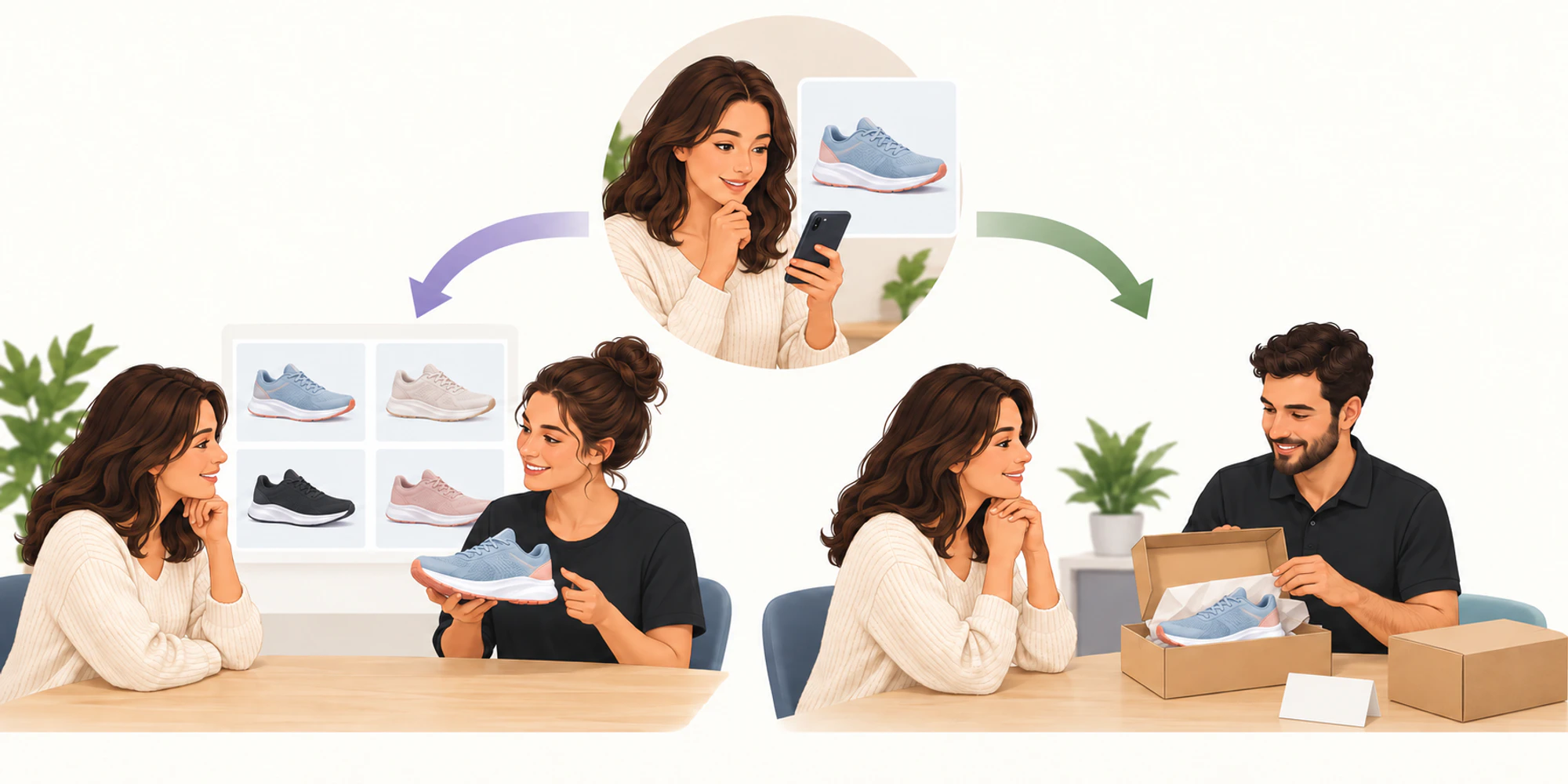
A runner sees an ad for shoes and asks whether the pair suits a wide foot. Instagram DMs keep the person close to the Reel and profile that created interest. WhatsApp can carry the question into size, stock, delivery, and an exchange later.
The better destination is the one that fits the customer's next task. Send the ad to Instagram DMs when the decision is mainly visual and the customer is already using Instagram context. Send it to WhatsApp when the enquiry is likely to continue through ordering, delivery, or service. There is no universal winner. Your offer, customer habit, and team's ability to reply matter more than the channel name.
Begin with what happens after the click
Do not choose a destination because it feels fashionable or produces cheaper conversation starts. Write what a serious buyer will need next.
- 1Ad promiseState what the customer can do after clicking.
- 2Customer taskMatch the destination to discovery, ordering or service.
- 3Inbox ownerName who monitors every relevant inbox view.
- 4Qualified outcomeMeasure the completed result beyond a message start.
A fashion customer may compare two colours from a post. A repair customer may send a model photo, receive an estimate, confirm collection, and return tomorrow. Instagram DMs often fit the first job; WhatsApp often fits the second. Start with the task, not a belief about age, country, or platform popularity.
Choose Instagram DMs for visual discovery
An ad leading to Instagram messaging keeps the customer near the account, post, or Reel that supplied the context. This can work well for style questions, product discovery, creator-led offers, and customers who want to inspect the profile before replying.
Meta's official Instagram messaging documentation says professional accounts can manage messaging conversations after a user sends a message. Check every inbox view the team monitors and test with an account outside the business team.
Choose Instagram DMs when a reply can refer naturally to the visible creative. The adviser should be able to answer without forcing the customer to restate which product attracted them.
Choose WhatsApp for practical continuity
WhatsApp conversations suit enquiries that may become an order, appointment, delivery update, or later service question. The official WhatsApp Business page confirms that ads on Facebook and Instagram can open a WhatsApp conversation. It presents the format across lead generation, sales, and marketing, but it does not promise that WhatsApp will outperform another destination.
Choose WhatsApp when customers use that number for practical contact and the next step is more than a reaction to a post. State who replies and what happens after hours. Leaving chat unanswered overnight is a broken promise in either channel.
Compare the real operating conditions
| Decision factor | Instagram DMs | What to verify | |
|---|---|---|---|
| Customer context | Post, Reel, profile, or visual range | Ongoing practical conversation | Where real customers already ask |
| Likely next step | Clarify, compare, or browse | Quote, order, book, deliver, or support | The next useful customer action |
| Inbox risk | Requests may be missed | Conversations may lose ownership | Every monitored view and queue |
| Team need | Preserve the creative context | Preserve history and agreed details | Named owner and backup |
| Success measure | Qualified product discussion | Confirmed business outcome | Result beyond a message start |
A shared inbox can reduce switching, but it cannot repair unclear ownership. Decide who takes a conversation, when it is handed over, and where an agreed size, address, or appointment is stored. Keep essentials in a customer record, not one employee's memory.
Run a fair destination test
If both destinations look credible, test the same offer, audience, creative quality, budget logic, and period. Comparing a polished Reel with a weak WhatsApp ad teaches nothing about the destinations.
Define one qualified outcome before launch. It could be a suitable product identified, an appointment confirmed, a quotation accepted, or an order completed. Track conversation starts separately from that outcome. Also record response delay, repeat questions, abandoned conversations, and staff time.
Use lead capture from ads to preserve campaign context where supported. Review conversation samples as well as totals. Twenty thoughtful enquiries can beat sixty greetings. If one destination loses because its inbox was unattended, fix the operation and test again.
Give customers one coherent path
Match the destination to the promise. “Ask which style suits you” can open Instagram DMs. “Check availability and arrange delivery” can open WhatsApp. Do not make the customer repeat the product and question.
DripTell can bring both channels into a path with ownership and customer context. That helps only after an honest destination choice. To map it, book a practical walkthrough around one real campaign.
Frequently asked questions
Are WhatsApp ads better than Instagram message ads
Not in every case. WhatsApp often fits an enquiry that continues into an order, booking, delivery, or support. Instagram DMs often fit visual discovery close to a post, Reel, or profile. Compare qualified outcomes with similar campaigns.
Should an ad offer both destinations
Usually one clear destination makes measurement and customer expectation easier. Different campaigns can use different destinations. If you offer a handoff later, preserve context and explain why the customer is moving.
What should a small team choose first
Choose the inbox the team already monitors reliably and the destination customers already use for that task. Run a limited test, name one owner, and measure completed outcomes before increasing spend.
Want help applying this guide?Ask the DripTell team
From reading to action
Want help applying this to your business?
Share your details. We will read the article you are on and start with a useful answer for your team.
DripTell Editorial
Practical guidance reviewed by the DripTell product and customer workflow team.
See how DripTell checks product claims, uses primary sources and handles corrections.
Editorial and source policy