




A customer sees an ad for made-to-measure blinds while standing in an unfinished room. She wants to know whether one fabric blocks enough light, whether installation reaches her area and how soon someone can visit. A WhatsApp conversation lets her ask now. A website lead form asks her to describe the project and wait.
Neither route is automatically better. Choose the route that matches what the buyer needs next and what your team can reliably do. Use WhatsApp when a useful conversation is part of the decision and someone can answer while interest is live. Use a website lead form when you need the same structured facts from every prospect or cannot promise a timely conversation.
Start with the buyer's next task
Ads that click to WhatsApp can run on Facebook or Instagram and open a WhatsApp chat. That removes the website and form step. It does not remove the need for a clear offer, a capable reply and a sensible handoff.
- Buyer taskIdentify what the customer needs immediately after the ad.
- Response capacityConfirm who can reply and how quickly the team can act.
- Information shapeChoose dialogue for changing questions or fields for consistent details.
- Qualified outcomeMeasure appointments, accepted quotes or purchases beyond the first enquiry.
WhatsApp fits a buyer who has a variable question: “Will this work in my room?”, “Which size should I choose?” or “Can you deliver before Friday?” The answer may lead to another question, a photo, a recommendation or a booked appointment. A good WhatsApp channel keeps that exchange in one conversation.
A website form fits a buyer who understands the offer and can provide predictable details. A cleaning company may need site type, area, location and preferred inspection time. The form creates a consistent record even when nobody is available.
Check whether your team can keep the promise
Sending an ad to WhatsApp promises that a conversation is available. If every chat waits until tomorrow, the shorter path has not improved the experience. Decide who watches the shared inbox and when a conversation changes owner.
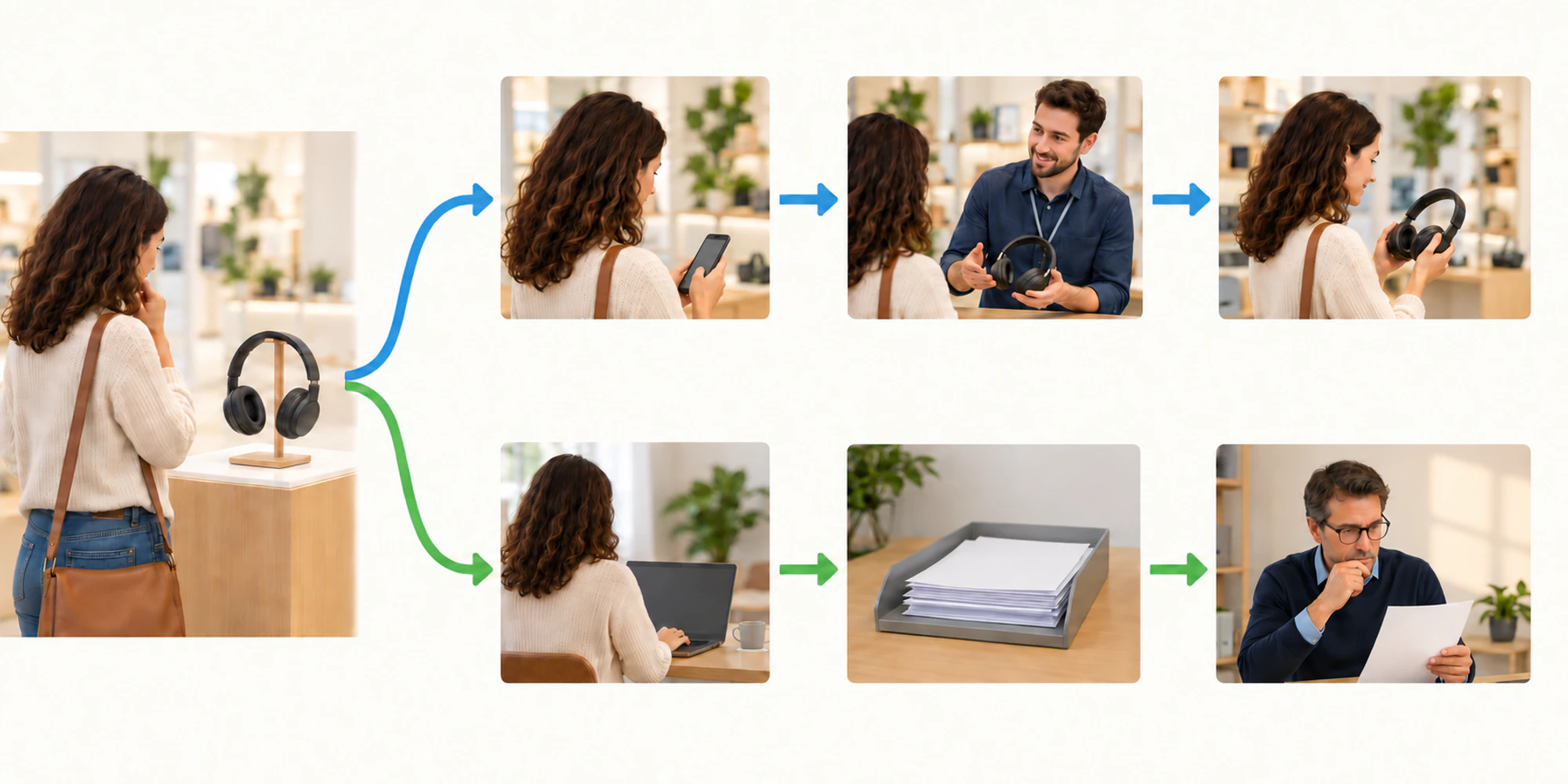
A form sets a different expectation: “Give us these details and we will follow up.” That can be more honest after hours. State what happens next without inventing a response time.
An automation workflow can preserve the source, while a clear conversation routing plan sends a chat or form to the right queue. The operating plan matters more than the button.
Compare the information each route collects
| Decision factor | WhatsApp conversation | Website lead form |
|---|---|---|
| Buyer need | Advice, clarification or reassurance | Submit known details for later review |
| Information shape | Changes as the conversation develops | Same required fields for every prospect |
| Team requirement | Someone can respond and guide the next step | Someone can review and follow up later |
| Useful record | Questions, answers and agreed action | Clean fields ready for qualification |
| Main risk | Slow or inconsistent replies | Abandonment or weak context |
| Better starting choice | High uncertainty and conversational sale | Structured enquiry and delayed handling |
Keep the first step proportionate. Nine fields for a simple question create work. A chat for a complex quote may make the team collect the same facts manually. Store agreed details in a customer record so nobody asks again.
Run a fair test instead of counting cheap leads
Use the same offer, audience and campaign period where possible. Split traffic between the two routes and define a real outcome before launch: qualified consultation, confirmed appointment, accepted quotation or completed purchase. A chat started and a form submitted are useful signals, but neither is automatically a customer.
Record how many enquiries reached that outcome, response time and staff effort. The official WhatsApp page describes measurement beyond a conversation, including Pixel, Conversions API and offline conversions. Use only methods your setup supports.
Review quality, not just volume. Ten detailed forms may beat thirty chats that only ask a price. The reverse may be true when one answer unlocks a purchase. The guide to tracking click to WhatsApp leads to an outcome connects the opening conversation with what happened later.
Make one route primary and keep an escape path
Choose by offer, not for the whole company. A configurable product can start in WhatsApp. A site survey can start with a form. In chat, send a secure form later if fixed details are required. Beside a form, offer a path for questions that do not fit.
Write one sentence before spending: “This ad should send people to __ because they need _ next, and our team can __.” If the sentence is vague, the campaign is not ready. If the team cannot name the owner, response expectation and qualified outcome, fix the operating path before increasing budget.
Frequently asked questions
Are WhatsApp ads better than website lead forms
Only when conversation helps the buyer decide and your team can respond usefully. A website form is often better when every enquiry needs the same structured facts or follow-up cannot be immediate.
Should I ask qualifying questions in WhatsApp
Yes, but ask only what changes the next action. Begin with the buyer's question, then collect essential details naturally. Move to a form when several fixed fields are necessary.
What should I measure in the test
Measure qualified outcomes, response delay, completion rate and staff effort. Keep chat starts and form submissions separate from booked appointments, accepted quotes or purchases.
Want help applying this guide?Ask the DripTell team
From reading to action
Want help applying this to your business?
Share your details. We will read the article you are on and start with a useful answer for your team.
DripTell Editorial
Practical guidance reviewed by the DripTell product and customer workflow team.
See how DripTell checks product claims, uses primary sources and handles corrections.
Editorial and source policy