




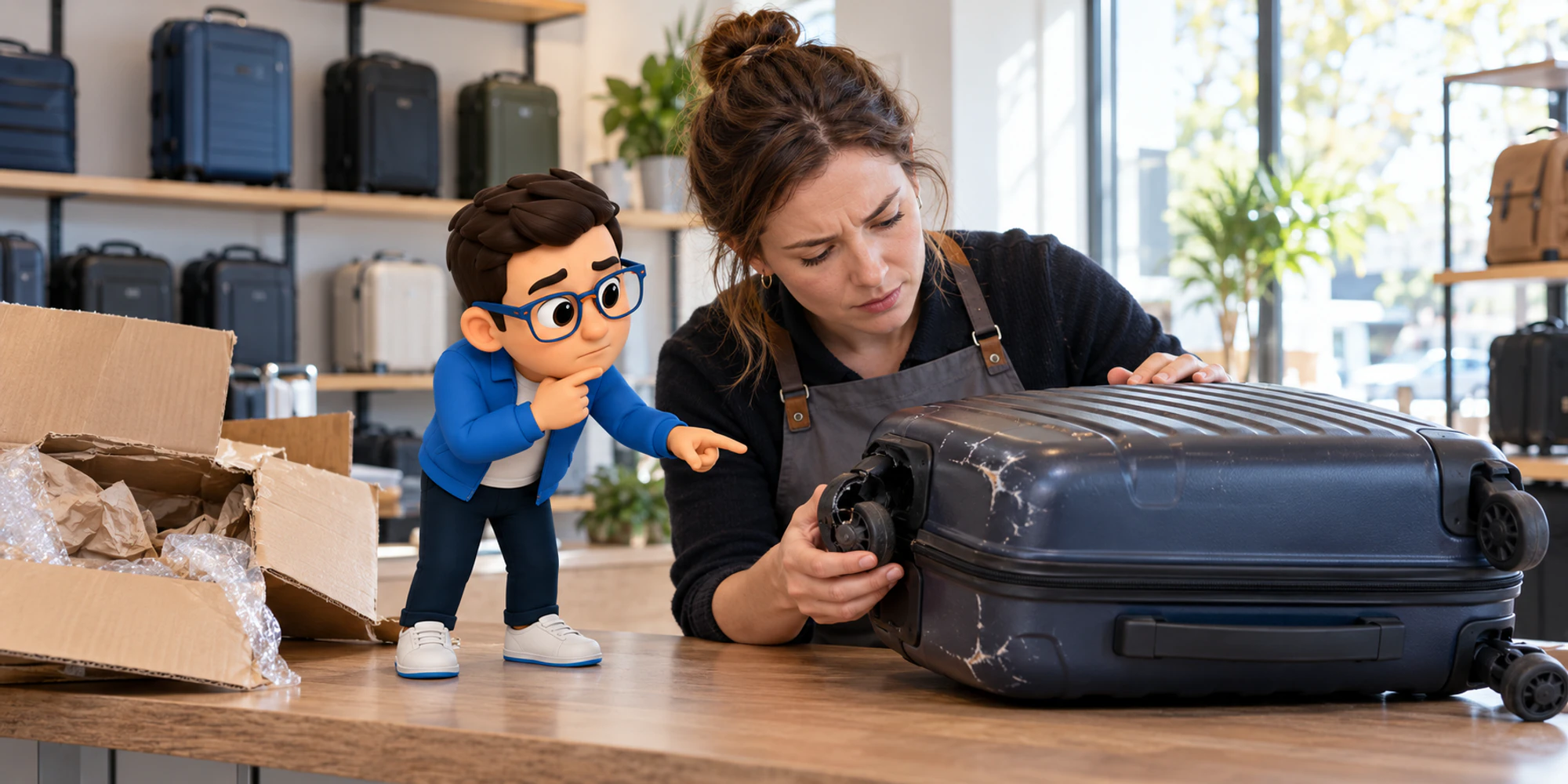
A customer opens a parcel, finds a cracked handle, and sends your WhatsApp number one photo with a short question: “What happens now?” They do not need a polished apology followed by silence. They need to know that you found the order, understood the problem, and will own the next step.
The best first reply is calm and specific. Acknowledge the damaged item, confirm what you can verify, ask only for missing evidence, and give a time for the next update. Do not promise a refund, replacement, or collection before the order and policy are checked. Do not blame the courier or ask the customer to repeat details already in the conversation.
Start with a useful first reply
A useful reply might say: “I’m sorry the suitcase arrived with a broken wheel. I found order 4821. Please send one clear photo of the outer box if you still have it. I’ll update you by 3 pm today.”
- Acknowledge the damageName the affected item and problem without blaming anyone.
- Identify the orderUse known customer and commerce data before asking the customer again.
- Verify the remedyCheck policy, evidence, stock, authority, and any inspection requirement.
- Own the next updateAssign one person and give a date or clear time window.
That message names the problem, proves the order was found, requests one relevant item, and creates a clear next moment.
Keep the conversation in a shared team inbox so the next agent can see the photo, order reference, previous promise, and current owner. If the customer has already supplied enough evidence, do not ask for a new video, multiple angles, or a written description merely because those fields exist in a script.
Ask only for evidence you need
Evidence requirements should come from the real return policy, not be invented during the chat. Useful details are the order number, affected item, a clear damage image, and sometimes the packaging or shipping label.
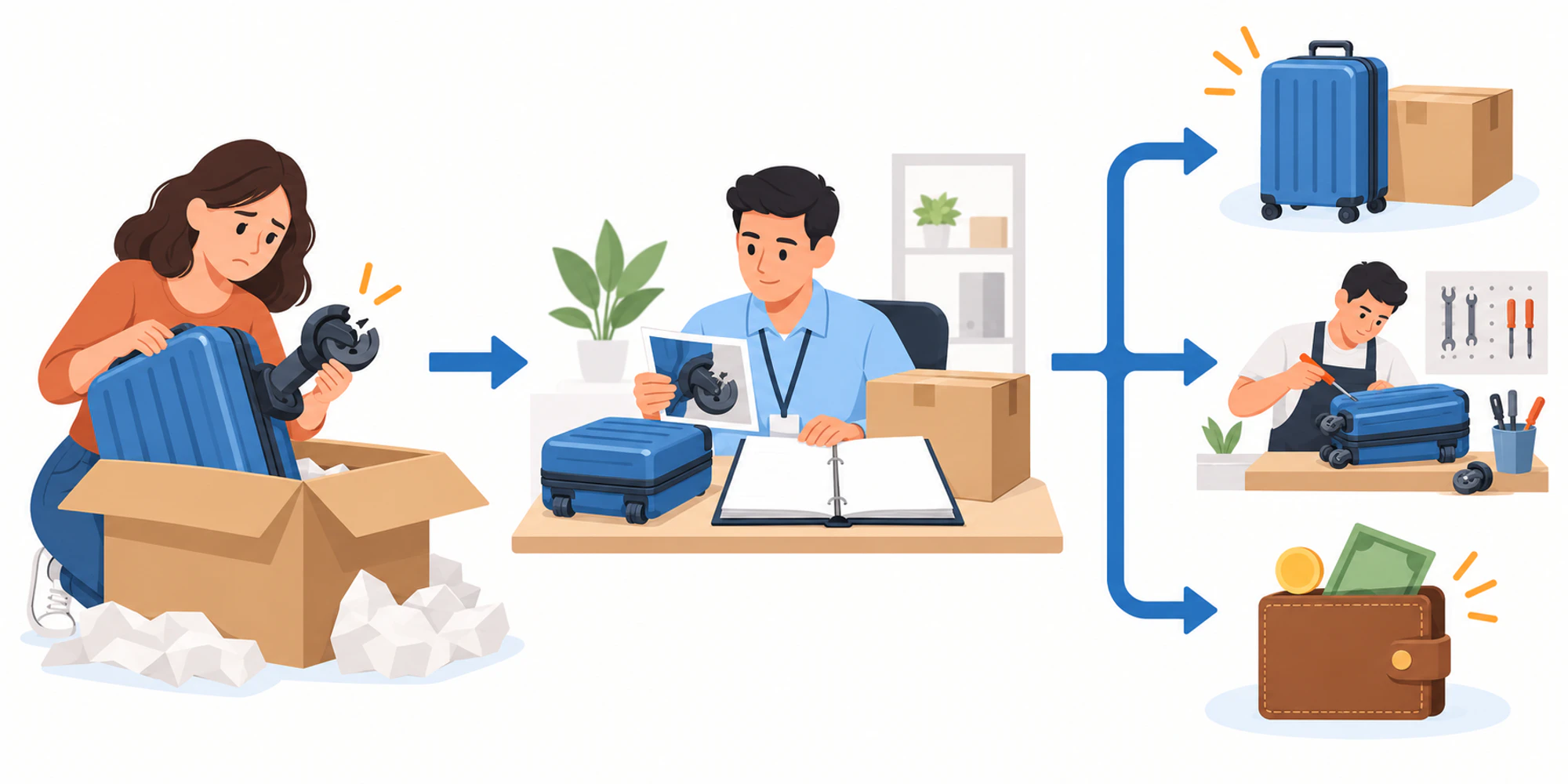
Explain any unusual request. “We need the serial number to match this appliance to the order” is better than “Send more proof.” If the product could be unsafe, tell the customer to stop using it.
Connect order events through an ecommerce workflow or Shopify integration so the agent can verify the purchase. Keep returns, exchanges, and refunds distinct in your reply.
Separate the claim from the outcome
A photo can show damage but does not automatically decide the remedy. Eligibility can depend on the item, delivery date, stock, local rules, and merchant policy. Say what is known and what still needs a decision.
| What is verified | Safe customer reply | Responsible owner |
|---|---|---|
| Order, item, and damage are clear | Confirm the eligible replacement, repair, or refund path | Returns owner |
| Order is found but evidence is missing | Ask once for the exact item the policy requires | Current support owner |
| Eligibility is uncertain | Explain the review and give a firm update time | Supervisor or commerce team |
| Outcome is approved | Confirm method, timing, collection, and reference | Operations owner |
Never offer an option you cannot deliver. If replacement stock is unavailable, say so. If a refund starts only after inspection, explain that sequence. Use a date or a specific update window.
Give the case one owner and one next time
Damage claims become frustrating when every reply starts again. Assign one owner, record the stage in your customer record, and note whether evidence, policy, decision, or outcome is pending.
If another team must approve the result, support should still own the update. “Our warehouse has the case, and I will update you tomorrow by noon” is stronger than “We forwarded this.”
The WhatsApp Business Messaging Policy requires clear escalation paths. A person must be reachable when automation cannot settle an unusual claim.
Use automation around the decision
Automation can gather an order number, attach photos, check a purchase, assign a queue, and remind an owner. Build those steps with workflow automation. Keep the remedy decision with an authorized person unless rules are precise and safe.
A practical flow is simple. Acknowledge the damage. Match the order. Collect only required evidence. Check eligibility and available outcomes. Confirm one result with timing. Keep the conversation open until the customer knows what happens next.
Measure repeated evidence requests, transfers, missed promises, time to a verified decision, and reopened cases. A fast greeting does not repair a damaged delivery. A trustworthy process does.
If your team needs to design that process across WhatsApp, order data, and human approval, talk to DripTell about the workflow rather than adding another generic reply template.
Frequently Asked Questions
What should the first WhatsApp reply say
Acknowledge the exact damage, confirm any order details already found, ask only for missing evidence, and give a specific time for the next update.
Should we promise a replacement immediately
Only when the order, policy, stock, and agent authority support that promise. Otherwise explain that you are verifying the available remedy and say when you will return.
How many photos should we request
Request only what the documented process needs. One clear damage photo may be enough. Ask for packaging or labels only when they are relevant to verification or a carrier claim.
When should a human take over
Use a human when eligibility is disputed, the item may be unsafe, the customer rejects the proposed outcome, the policy is unclear, or automation cannot verify the order confidently.
Want help applying this guide?Ask the DripTell team
From reading to action
Want help applying this to your business?
Share your details. We will read the article you are on and start with a useful answer for your team.
DripTell Editorial
Practical guidance reviewed by the DripTell product and customer workflow team.
See how DripTell checks product claims, uses primary sources and handles corrections.
Editorial and source policy